Accessible Deck Design: Safety, Ramps, Materials & Lighting
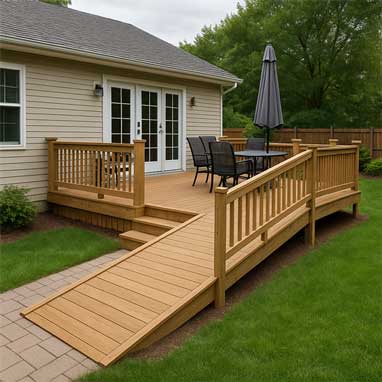
Outdoor decks serve as a valuable extension of the home, spaces for gathering, relaxing, and enjoying nature. But to be truly welcoming, they must support the needs of all users, including those with mobility, vision, or sensory challenges.
Designing a deck for accessibility and inclusivity means going beyond code compliance. It involves planning for ease of use, safety, and comfort across a wide spectrum of physical and cognitive needs. Whether it's ensuring smooth transitions from indoor to outdoor living areas or selecting features that reduce the risk of slips, inclusive design opens the door — literally and figuratively — to more people.
To fully answer the question of how decks can be made accessible and inclusive, several design considerations need to be addressed. Read on to explore these practical strategies and learn how customized decks can be thoughtfully designed to support accessibility from the ground up!
Key Design Features That Enhance Deck Accessibility for Individuals with Mobility Challenges
Creating an accessible deck begins with a focus on the physical layout and structural elements that ease mobility. Features such as wide, smooth pathways — at least 36 inches clear — allow for the safe and comfortable use of wheelchairs or walkers.
Step-free access is essential, which can be achieved using flush thresholds between interior and exterior transitions or zero-step deck entries. Platform lifts may also be employed when elevation differences cannot be bridged through ramps. Surface materials should be even and tightly spaced to avoid tripping hazards or obstacles that impede rolling movement. These foundational elements make deck spaces navigable for people with diverse physical abilities.
Proper height accommodations also improve usability. For instance, guardrails should maintain required safety standards while leaving unobstructed views for those seated. Balusters must be spaced to prevent entrapment and support the use of mobility aids. In addition, benches with back support and armrests provide safe resting options and assist those who may need help rising. Doorways leading to the deck should feature lever-style handles and automatic or low-resistance operation to accommodate limited hand strength. Together, these components help eliminate common barriers that can isolate individuals from participating in outdoor life.
Accessibility guidelines from the ADA and local codes provide a baseline, but best practices go beyond minimums to foster true inclusivity. Roofers of Minnesota incorporate universal design elements into their custom decks to ensure everyone in the household, and guests alike, can safely and comfortably enjoy the space, regardless of age or mobility level.
Integrating Ramps and Railings Without Sacrificing Deck Aesthetics
Ramps and railings are indispensable for accessible deck design, but their presence doesn’t need to detract from visual appeal. When planned alongside the initial design, these elements can be seamlessly integrated using consistent materials, color palettes, and architectural lines.
For example, a gently sloped ramp constructed with the same wood or composite as the primary decking can appear as a natural extension rather than a retrofit. Curved or flared designs add visual interest, while landscaping along the ramp path offers a soft transition that blends function with beauty.
Railings, too, can contribute to the overall style when thoughtfully chosen. Sleek aluminum, powder-coated steel, or cable railings deliver a modern look, while wood balustrades stained to match the deck can preserve a traditional or rustic aesthetic.
Integrated lighting within the handrails can enhance both function and ambiance. To meet accessibility requirements, railings must provide continuous graspability, typically at a height between 34 and 38 inches. However, this doesn’t preclude customization — rounded handrails with decorative brackets, hidden fasteners, and matching post caps can elevate the visual experience.
Choosing the Best Slip-Resistant Materials for Safe Decking Surfaces
Slip-resistance is a non-negotiable feature for inclusive decks, particularly in regions with rain, snow, or freeze-thaw cycles. Materials should be chosen not just for aesthetics or durability, but also for their ability to maintain traction under wet conditions.
Composite decking, especially designs with textured surfaces, is highly slip-resistant and requires less maintenance than wood. PVC decking with embossed woodgrain patterns is another effective option, often tested for slip performance in compliance with ASTM standards. Avoid glossy finishes or sealants that can become slick when exposed to moisture.
Traditional wood decking can be made safer through treatments and surface modifications. Brushed or grooved finishes improve grip, while anti-slip coatings or grit-infused sealants offer additional traction. It's also critical to consider drainage and slope design to prevent water pooling, which leads to ice formation in cold climates. Metal fasteners should be flush with the surface to avoid snagging, and board spacing should allow water to pass through easily. All of these design decisions directly impact user safety, especially for those with reduced balance or reflexes.
The Role of Deck Lighting in Promoting Accessibility During Low-Light Conditions
Lighting is critical for extending deck usability beyond daylight hours and reducing risk for all users, particularly those with vision impairments or mobility constraints. Strategic illumination of stairs, pathways, and changes in elevation minimizes the chance of missteps and falls. Motion-sensing lights provide automatic activation, which is beneficial for users who may struggle with switches or need hands-free operation. LED strip lights along railings and step risers can outline edges without producing glare, improving visibility without overwhelming brightness.
Ambient lighting supports general visibility, while task lighting focuses on specific activity zones, such as dining areas or grilling stations. Contrast lighting — where changes in surface level or direction are highlighted by brighter fixtures — helps users navigate transitions more confidently. Color temperature also matters: warm white lights (2700–3000K) offer comfort, while cooler tones can improve visual acuity in task areas. Accessible lighting should also consider placement heights and controls, making sure switches are reachable and labeled for users with low vision.
Proper lighting contributes significantly to both aesthetics and safety. A well-lit deck not only increases usability after dark, but it also helps create a welcoming, inclusive environment that anticipates the needs of diverse users.
Designing Deck Furniture Layouts That Support Easy Navigation and Inclusive Use
Furniture placement can significantly impact the accessibility of a deck. Thoughtful layouts maintain a minimum of 36 inches of clearance along primary pathways, allowing for unimpeded movement of wheelchairs, walkers, or strollers. Furniture with rounded corners reduces collision hazards, and avoiding clutter in high-traffic areas supports safer navigation. Lightweight or movable pieces offer flexibility, letting users adapt the space for social gatherings, quiet time, or mobility needs without assistance.
Seating should be diverse in height and support features. Benches with backs and arms provide stability, while options with adjustable heights accommodate various needs. Fixed features like built-in benches should still allow space around them for circulation. Tables should have ample knee clearance underneath and be positioned with surrounding space for maneuverability. Additionally, anchoring rugs or mats helps prevent tripping hazards in furnishing zones.
How Roofers of Minnesota Can Support Accessible and Inclusive Deck Design
Designing a deck that is both accessible and visually appealing requires skill, experience, and a deep understanding of universal design principles. At Roofers of Minnesota, we bring over 25 years of exterior construction expertise to every project, specializing in building customized decks that go beyond standard specifications to ensure each feature is selected for safety, functionality, and aesthetics.
If you're ready to improve your outdoor living space with a deck that’s accessible to all, contact Roofers of Minnesota! Visit us in person at 18349 70th Ave North, Maple Grove, MN 55311, call 612-205-4791, or request a quote online to get started.